
Keoni DeFranco: Returning Home from the Hawaiian Diaspora
- Jul 31, 2025
- 23 min read

Welcome to our Returning Home series, where we feature a Diasporic Hawaiian who has moved back home. In each story, we explore their upbringing, struggles, and insights they’ve gained on their unique path to reconnection.
Interview by Cris Romento, director of Dear Aloha

Keoni DeFranco is an activist, community organizer and tech startup founder who moved back home in 2022. I met him at Puʻuhonua O Waimānalo, the Nation of Hawai‘i’s sovereign village on the Windward side of Oʻahu. Here, a collective of people from around the island are actively restoring an ahupua‘a system, the traditional land division that once sustained pre-colonial Hawaiians.
When I arrived, Keoni and a small group of students were installing the village’s first weather monitoring system tucked near the Nation of Hawaiʻi headquarters, where he serves as Minister of Interior. As we walked to the loʻi, which had changed since I took my ʻohana nearly a year ago, he pointed out ancient plants thriving in the area.
That fusion of ancestral wisdom and innovation is at the core of Keoni’s work. As a Managing Director of ʻĀina Foundry at Purple Mai‘a Foundation, a nonprofit dedicated to advancing education and economic justice through technology, Keoni helps develop local startups and create pathways for youth in the islands’ tech ecosystem.
Now based in Waimānalo, he shares how he stayed connected growing up amidst racism in rural Virginia, how his NYC tech startup eventually led him back to Hawai‘i, and valuable resources that helped him feel rooted in the diaspora.


Let’s start at the beginning. Where did you grow up, and what was life like for you? Who was your community?
Aloha kākou. O Keoni koʻu inoa, no Wilikinia mai au. Aloha, my name is Keoni DeFranco. I grew up in Northern Virginia with access to the woods and a stream, where I spent a lot of my youth playing outside with my sister.
The accurate spelling of my last name is Di Franco, a Sicilian name inadvertently changed during my great grandfather Antonio Di Franco’s immigration through Ellis Island in New York City from Palermo, Sicily. I was born and raised in the occupied traditional lands of the Patawomeck Tribe, in Virginia along the Potomac River with my sister Lehuanani. My mother, Diane ʻIlimia Ching is Kanaka ʻŌiwi, born at Ft. Benning, Georgia. My Father, Laurence Joseph DeFranco was born in Brooklyn, NY.
My mother is one of six. Both of her parents were half Kanaka ʻŌiwi and half Chinese. They met at the University of Hawaiʻi as undergrads. My grandfather Harry Len Fong Ching was born and raised in Ewa Beach, Oʻahu. He served in the Army and finished his career in Washington, DC, where my mother finished high school and the whole ʻohana stayed. His Mother, Elizabeth Naholowaʻa’s ʻOhana was from Kona, Hawai’i Island.
My grandmother Sylvia Hualani Morton- McGuire was born and raised on the island of Molokaʻi. She was a Kamehameha Schools grad, spending time while boarding with her step-father’s McGuire ʻOhana in Mōʻiliʻili, O’ahu who operated the Willows Restaurant above the Kamōʻiliʻili spring. Her mother Earline Manono Williams was born in Hilo where 4 generations of the Hapai ʻOhana lived after moving from ʻIole, North Kohala in the 1840s. Her father, Arthur David Morton was born in Makawao, Maui and was part of the Cockett and Shaw ‘Ohana of Waikapū and Lahāinā, Maui.
I was fortunate that my parents took my sister and I to visit Hawaiʻi often growing up. We would visit ʻohana on Oʻahu, Hawaiʻi Island and Molokaʻi. It helped me develop pilina with our ʻohana and the ʻāina of various moku, which left a lasting impact on me. While facing racism at home and never fully fitting in, Hawaiʻi was the one place where my identity was never questioned. Everyone we met knew my mother and treated us like family. It reinforced that Hawaiʻi was our true home and the only place I felt accepted. My mother always said the end goal was to move back, so returning was always a part of my reality.
The mission was to find a way home. As I grew older, that mission evolved into the understanding that I needed to be in service to the lāhui in order to feel truly comfortable coming home. That helped me refine my intentions and sense of direction.

Did you grow up with Hawaiian culture?
I was lucky to have grown up with a big Hawaiian ‘ohana around us. As I mentioned, my mother is one of six and my sister and I have thirteen first cousins. Our families were close, so we gathered at my grandparent’s house frequently. My grandparents and great grandma kept the Hawaiian culture alive in their household. My grandfather played the ukulele and we had a lot of singalongs. My grandmother, my mom and our aunties and uncles cooked Hawaiian food frequently, kālua pig, chicken long rice, lomi lomi salmon, poi, haupia. Even when growing up outside of Hawaiʻi physically, we are still Kanaka at our core. We always knew we were Hawaiian, and our identity was important to us. We were proud of our heritage. My grandmother was active in a hula hālau in Virginia and continued to study ‘ōlelo Hawai’i throughout her life.

My great-grandmother, Puna, moved from Molokaʻi to live with my grandparents when I was in third grade. She was always telling us stories of growing up Moloka’i and frequently spoke to me in ‘ōlelo, telling me to just listen because it was important, even if I could not understand her. She referred to her style of Moloka’i ‘ōlelo as an older dialect not frequently heard anymore, saying it was important for the words to be spoken out loud and to be heard by us. I got to visit her on Moloka’i before she moved and remembered how big and welcoming our ‘ohana was, how good of a fisherman my great uncle was and how much fun we all had together. We cherished the 5 years we had with Puna nearby and learned an incredible amount of what it meant to be proud of our Hawaiian heritage from her.
I still remember when my cousin began to go by her Hawaiian inoa, her middle name, Leilani, in elementary school, as a form of pride in our Hawaiian roots. It was such a cool moment to witness and I watched as each of my cousins rooted themselves in their Hawaiian identity in different ways, some joined hula hālaus, others learned hana no’eau and some read books like me. My mother was taught how to quilt by our Puna and she passed that down to my sister, working on some of the same pieces between 3 generations. Within our cousin group, we were a little unit, constantly sharing with each other any piece of Hawaiian knowledge we had recently learned. My mother and her siblings were very close, growing up on army bases around the world, constantly having to build ʻohana within their home on the road. I think we all adapted that philosophy. The word diaspora wasn't in our lexicon, we were just Kanaka away from home.
Did you experience any kind of discrimination where you lived?
I had a good group of friends, but from elementary school through high school, I continually faced levels of racism, questioning why I did not look like those around me. This came from classmates, teachers and parents of friends. The constant question of “where do you come from?” ensured I never felt like I truly belonged. Not all of it was rooted in discrimination, but that's just how it went.
Sometimes I say, the diaspora experience is constantly having someone say the most racist and incompetent comment about Hawaiians right to your face and you gauging how you are going to react to this one.
It’s jarring to constantly have your identity questioned against your will. I found a way to channel those emotions into honing my argument for Hawaiian sovereignty.
When I was a keiki, I remember coming home from school and asking my ‘ohana why we looked different. Earlier that day, I was responding to a girl in school who was asking questions about me being Hawaiian. I remember her reply being, “Well I’m from Texas, Hawaii is just a State. You still look different, why?”
The answer to this question led me down the path of my awakening to the true history of the American Occupation of Hawaiʻi and the illegal overthrow of the Hawaiian Kingdom at a young age. My parents, grandparents and great grandmother helped guide me down a path of self education on the history of Hawaiʻi and it began to make sense why we did look different, even though Hawaiʻi is considered a State.

I channeled these questions into pride in my ethnicity as a Hawaiian and began arguing on the school grounds just why it was so much cooler to be a Hawaiian and how we aren’t American at all, which is precisely why we look different.
I grew up with my mother reading me Kamakau’s Ruling Chiefs as a keiki and began to share the stories of Kamehameha’s feats, letting them know he was 7 ft tall and would have thrown George Washington off the Pali if they crossed paths. My Marvel heroes came to life, as I shared our Aliʻi’s moʻolelos with what turned into a captive audience.
These school ground debates evolved into deeper research on the legal history of the Occupation as I entered High School. When I started to make a bit of sense in my debates, I began to take this train of thought more seriously. My mother became my main sparring partner, challenging each of my attempts to rationalize why Hawaiian independence was inevitable on car rides to school. Her insistence, based on her lived experiences, the high costs of living, the dependencies on imports and the challenges of life on an island pushed me to study more and develop counter points to each of these arguments. She was questioning the specifics of how Hawaiʻi could survive as an independent nation and become self-sustaining. I could never win, which was a blessing as it inspired me to continue refining my thoughts. Our conversations had evolved past our legal “right” to independence into the necessities of a functioning sovereign government. My father was highly supportive of my growing interest in sovereignty movements, passing me books on liberation struggles from around the world, from the Irish, to the Russian Revolution. Sometimes, we would map where the rebellion would begin on a map and game theory it out. The racism did not end along the path.
Through high school I constantly faced jokes about being Asian and off comments from friends' parents and teachers. I built up my self confidence and my identity in my own ways, but continued to feel uncomfortable having to respond to each joke and it was tough to deal with.
My BIPOC friends and I formed what we called the “Colored Club” and plotted world domination. But most of the time, I was just trying to fit in.
In college, I studied the Israeli occupation of Palestine to understand decolonial theory more tangibly. Debates with supportive college friends shifted into public advocacy for Hawaiian rights as I moved to NYC after college. Reading Keanu Sai’s Ua Mau Ke Ea: Sovereignty Endures in 2011 blew my mind as I began to understand the depth of the legal argument for Hawaiian Sovereignty. Along the path, my sister became as inspired as I was to contribute to the movement.

Is there anything that helped you feel rooted in the Diaspora?
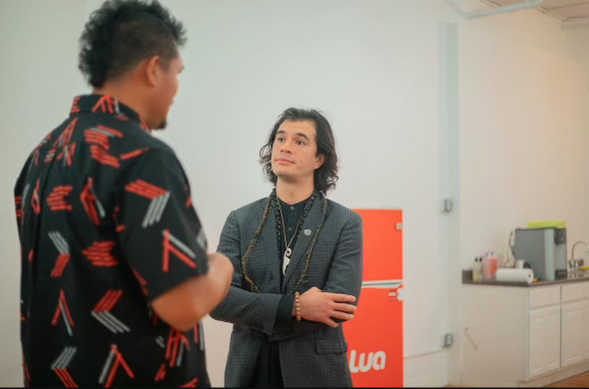
As I got older, creating spaces to celebrate Hawaiian culture was always a primary motivator for me. While in college, I designed a software platform that turned into an idea for a company. After graduation, I moved to New York City with two of my best friends. We co-founded a technology company and moved in with my friend’s older brother who invited us to live with him for our first 2 years in NYC. My aunt is a lua practitioner and after conversations with her and my grandfather who inspired the name with a book on lua he gifted me, I decided to name the company Lua Technologies to honor our culture. Motivated by disaster recovery efforts, we designed a web and mobile communications platform that helped first responders coordinate and communicate in the field. We provided our mobile-first communication system to a range of industries from live events and concert tours to sports venues, and hotels. We eventually found product/ market fit in the Healthcare IT space, providing our solution to healthcare systems across the US, eventually becoming the industry leading solution for HIPAA compliant mobile-first communications in the post-acute healthcare space, building telehealth video capabilities, virtual patient portals and Electronic Medical Record (EMR) integrations. We had an office space in Manhattan, NYC which we offered as a community center and organizing space for our Hawaiian and Pasifika communities to host cultural programming such as hula halaus, ‘Ōlelo Hawai’i classes, hana no’eau workshops as well as panels and talk stories, especially when Kanaka came to visit New York. Uncle Liko Martin used to visit us and sleep on the couch!

I met Auntie Pua Case in 2014, who made an effort to organize the Hawaiian NYC community around the Protect Mauna Kea movement. She held oli classes and presentations on TMT and told us to be ready to come support the Mauna in-person one day. She gave our community kuleana to raise awareness for Mauna Kea in NYC and empowered us to become part of the resistance. My sister and I, along with others, began to organize regular rallies in Union Square Park after that. Auntie Pua visited NYC each year, becoming an active leader in our annual NYC Indigenous People’s Day Celebrations, riding with the Redrum Indigenous Motorcycle Club. I deeply appreciate her making that intentional effort to include us. In 2019, I spent 6 weeks camped at Puʻuhonua o Puʻuhuluhulu, from August to October when the kāhea came.

I also had the unique opportunity to study oli with Dr. Pualani Kanahele Kanaka’ole with my friend Kris Kato from Hilo. I met Kris and we came across a Kanaloa chant in a book about Kaho’olawe. Kris had Dr. Pualani as a professor at UH Hilo and we emailed her asking if she could teach us the chant. We were able to meet with her once a week via Skype, which we helped her download to her laptop. I think she was curious about some kane in NYC deeply interested in Hawaiian culture. She said yes but that she would need to teach us about oli first. We met weekly for 2 years and in 2015 went through formal Uniki rites in oli, with a hōʻike at an opera performance hall in NYC.
Dr. Pualani gifted me with a spiritual practice that firmly grounded me as a Kanaka cultural practitioner far from home. She gave me a method of communicating with my kupuna and our akua in a way that transported me home when chanting from a NYC rooftop.
Becoming an oli practitioner shifted my consciousness and transformed me as a person. Oli is rooted in the creation of sound vibrations that transcend realms and enhance our connection with the elements. I am eternally grateful to be her haumāna. My sister and I were on a plane as quickly as we could once we saw Dr. Pualani was arrested on Mauna Kea in July 2019 for standing up for our rights as Kanaka to protect our wahi panas. I believe the stand on the Ala Kupuna (the Kupuna Tents that blocked the Mauna Kea Access Road) pulled many of us home, to protect our ʻāina, our culture and our lāhui and showed us a vision of what a better society could truly function as, a thriving Puʻuhonua. I danced Hula for the first time on the Ala Kupuna. That Puʻuhonua and the community built on the Mauna opened a portal for me to step through and return home.

How did this journey back home begin for you? Why did you decide to move back to Hawaiʻi? If there was a moment that inspired you to move back, tell us about it.
In 2016, I connected with Donavan Kealoha, Founder and Co-CEO of Purple Maiʻa Foundation. He reached out as he was interested in touching base with a Kanaka building tech in NYC. Donavan made the effort to stay in touch and schedule a call once a quarter after that, inviting me into the world of Purple Maiʻa where I began to volunteer as a mentor for their Purple Prize incubator for early stage startups, visiting in person periodically. I fell in love with the mission and was offered an opportunity to collaborate more officially in the future.
I was also fortunate to cross paths with Brandon Makaʻawaʻawa while he was representing the Nation of Hawaiʻi (NOH) at the United Nations Permanent Forum on Indigenous Issues (UNPFII) in 2018 and helped NOH host an informational briefing during the 2019 UNPFII at our NYC offices. I was invited to visit Puʻuhonua O Waimānalo in person and began to connect with Uncle Bumpy Kanahele who truly inspired me with his vision of a sovereign and independent Hawaiian Nation.
I credit these key Kanaka and Kumu in collectively recruiting me to move to Hawaiʻi and assume kuleana across cultural practices, sovereignty organizing and economic development initiatives.

How are you able to survive living in Hawaiʻi?
After my time on Mauna Kea, I finally felt confident enough to feel I would have a supportive community if I did take a leap of faith and move. In 2020, I began real conversations with Donavan about joining Purple Maiʻa full-time and we were able to create a position of "Entrepreneur in Residence” which allowed me to begin thinking about my contributions to the economic development landscape of Hawai’i. I officially joined Purple Maiʻa remotely in the summer of 2021 during COVID. I came to visit the office in January 2022 and asked if I could stay. Donavan said, that was the idea.
During that trip, I was visiting with Brandon and Uncle Bumpy at Pu’uhonua O Waimānalo who asked me what my plan was and if I was going to stay. When I said I wanted to, Uncle asked where I was going to live? When I shared that I didn't have a plan yet, he said, “Put your bags down, you’re home.
I will always be eternally grateful to these Kanaka who helped me return home. I now oversee Venture Development at Purple Maiʻa, where I support the growth of Native Hawaiian businesses and culturally rooted technology companies in pursuit of what we call "Eahou:" Economic Autonomy for a self-determined future Hawaiʻi. One of our current initiatives is called KILO (Kanaka ʻIke, Laulima ʻŌiwi), a community-based environmental monitoring system built to track the health of ʻāina and wai. Combining ʻŌiwi knowledge systems with low-cost sensors, open-source dashboards, and machine learning tools, KILO equips communities with data while restoring traditional loʻi kalo, loko iʻa, agriculture and water systems while reclaiming data sovereignty. We are partnered with a Purple Mai’a portfolio company, Makaliʻi Metrics, which is developing Hawaiʻi’s first commercial soil testing lab. Collectively, we are able to better understand water quality, soil health, and the impacts of colonial contamination across Hawai’i. We need to be building our own community infrastructure to better steward our natural resources.
What were some of the challenges of moving back? Was there any hardship you faced after moving back home?
While I had ‘ohana, great co-workers and housing, as a new person entering a tight knit local community I didn’t grow up in, it can be intimidating.
It's not easy to make new friends and I can be quiet and shy at times. In many ways, it’s building a brand new life for yourself, which can be scary. I know there will always be references, jokes and local cultural knowledge I’ll never catch up with.
But I’m happy and content that my keiki will be born and raised on the sands of their kūpuna. I’m blessed to be dating a wahine I absolutely adore.
I was heavily involved in organizing around Red Hill when I first arrived but that cannot be your only social outlet as it gets intense and can be challenging on your mental health. A wise Uncle told me to find a hobby or risk burning out. Aloha ‘Āina is where I found my community and my happiness. Mahalo to Kumu Kimeona Kane for inviting me into his hui as I jumped into as many weekend work days as I could and began to learn uhau humu pōhaku, Hawaiian dry-stack stone masonry. I spent weekends traveling across Oʻahu and the pae ‘āina to support as many groups as I could, building pilina and connecting with ‘āina. Aloha ‘Āina is where I found peace and began to firmly understand the concept of “Kū’ē to Kūkulu,” resist and protest when needed but focus on building a strong sovereign foundation, a landbase. I began to realize our ‘āina practitioners are gaining massive amounts of ʻāina back and need community support to steward it. Through ahupua’a restoration and increasing food security, we are rebuilding our nation across the pae ‘āina, one pōkua and lo’i kalo at a time.
Eventually we started monthly Aloha ‘Āina days at Nation of Hawai’i, led by Keali’i Frank and Brandon Maka’awa’awa as we restore the Kūpuna Terrace Complex at Pu’uhonua O Waimānalo. I began kalo farming with Keali’i and our hui at Nation of Hawai’i when I first moved home. I’m happy that our Aloha ‘Āina ‘ohana continues to grow as we gather every last Saturday and that I continue to hear of new friendships and pilina sparked there, one of the functions of a thriving Pu’uhonua. A return to ahupua’a restoration continues to play a vital role in my life as the path towards ea, we all have a role to play to ensure the wai is flowing smoothly past us.
We are now harvesting over 100lbs of kalo a month on a perpetual schedule, which is feeding our village, community and local charter schools.
We’re pairing this work with KILO, our environmental data dashboard, to monitor the health of our loʻi and streams in real time, supporting ʻāina-based restoration with community-generated evidence, which is helping us advocate for stewardship of our stream from mauka to makai.
We are committed to growing a network of autonomous self-governing Pu’uhonuas on sovereign landbases across our pae ‘āina which are able to provide regional food security, mutual aid, housing and energy sovereignty on the path to self-sufficiency. Now more than ever, we must be prepared to fill the gaps of our State’s failing infrastructure and assume stewardship of our natural resources, we must be thinking multi-generationally.


There is a pervasive feeling I've heard when talking with Hawaiians about not feeling “Hawaiian enough.” Is this something you relate to?
I think we have all faced not feeling Hawaiian enough. When I moved home and realized that even Kanaka in Hawaiʻi feel this way, I began to understand how internal our journey of self-discovery within Hawaiian identity is and how deeply rooted our history of cultural suppression under the American Occupation has been.
My grandmother grew up speaking fluent ʻŌlelo Hawaiʻi at home on Molokaʻi. It was only when she began attending Kamehameha Schools that the kumu there began to physically discipline her by smacking her knuckles with a ruler whenever she spoke ʻŌlelo.
She eventually lost the language, later in life she began to study again and continued her practice until the end of her life. She always regretted losing the language. Our disconnection from our Hawaiian culture was not out of neglect or disinterest, it was beaten out of us by the Occupation.
Our Kanaka population contracted from 1 million in 1778 to 24,000 by 1920. We are the survivors. Our loʻi kalo and streams were severed with cement diversions by settler-colonial sugar plantations, our loko iʻa filled in for hotels and military bases. Our food system was methodically destroyed by the American Occupation, disconnecting us from ʻāina-based abundance and leaving us dependent on imports for 90% of our food. There is a spiritual component to losing access to traditional foods, and it's important to acknowledge this multigenerational trauma as we navigate our personal cultural journeys and offer grace to ourselves and each other. The only thing we can do is engage with Hawaiian culture with intention and love, constantly and frequently. Kumu and community will emerge to accelerate your learning journey along the way, lean in and do the best you can. We are all Hawaiian enough.
What do you feel Hawaiians at home and Diasporic Hawaiians have in common?
A Kanaka is a Kanaka no matter where you were born and raised. If you have one kupuna who was Kanaka, you have the DNA of history’s greatest navigators, warriors, food producers and strategists within your veins. Mālama that, chant to that, honor that connection. When you can confidently walk down the street or into the forest with your 40,000 ancestors behind you, you are unstoppable and you don't have to explain yourself to anyone. That's between you and your kupuna at that point, keep that portal open Kanaka. But walk the pono path, in service to ʻāina and lāhui. It's important to give our people grace as we all attempt to survive under capitalism, whether within occupied Hawaiʻi or occupied Turtle Island, the principle contradiction is still there. We all suffer under American imperialism. The majority of our ʻŌiwi have been displaced from home as a direct result of the widening wealth gap.
The mission is to co-create a better Hawaiʻi for all and dismantle this oppressive system, replacing it with one rooted in kindness, waiwai and compassion.
We should all be working together to decrease our cost of living and improve our eroding material conditions which continue to be co-opted by the same corporate class that led an armed coup against our government. To me, this means a dedicated and principled working class-based struggle for national independence, in pursuit of a better quality of life for all. We must fight for societal pillars that include universal healthcare, free college education, food sovereignty and housing security. These policies are the vision of an Independent Hawai’i. We descend from a Kingdom and leadership that valued compassionate care for the wealthfare of all its citizens, we can achieve this waiwai once more.
Half of our Nation, more than 50% of Kanaka on earth, now make up the diaspora. We must engage with intention.
We have much to learn from the Chinese and the Irish about effectively organizing in the diaspora and giving them kuleana, so they are able to find their kūlana and their way to support the movement and the culture. We also should not assume Kanaka have to be involved in lāhui work whether here or in the diaspora. But they should feel invited. I mahalo Auntie Pua Case for her organizing efforts in NYC and how included it made me feel. Our diaspora have so many gifts to bring home, if they so choose. Let us all give each other grace as we navigate these uncharted waters together.
What advice do you have for others in the Diaspora who are considering moving back?
Read as many books on Hawaiian history, culture and politics as you can. A great starting point is Kamanamaikalani Beamer’s No Makou Ka Mana: Liberating the Nation which explores the legal and political framework of the Hawaiian Kingdom through Hawaiian-language primary sources.
If you have access to ʻohana and kupuna willing to kōkua, I would say dive into your moʻokūʻauhau, learn your genealogy and where your roots are from. My journey into moʻokūʻauhau pulled me back home. The more I learned, the more I felt confident in my kuleana to serve our lāhui. I was fortunate that my great grandmother supported my journey and guided my initial steps as an ʻopio, sharing many stories of our kūpuna with me. My grandmother shared a binder of genealogy documents with me at my college graduation that propelled my research further and it was around that time that I found my first kupuna signature in the Kūʻē Petitions. In 2010, I had just graduated from college and the Hawaiian Civic Club was hosting their annual convention in Washington DC. I had been invited to join the `Āinahau O Kaleponi Hawaiian Civic Club of California through an Auntie of mine. That first time, before walking into Convention, I noticed a hui setting up an exhibit. It ended up being the first time I met Auntie Lynette Cruz and Auntie Clare Apana, who were setting up a Kūʻē Petitions exhibit of the names spread out around the Washington Monument. I was loosely familiar with the petition but Auntie Lynette really explained the significance that day. As I was laying down the names, I found one of my kupuna names, which was another moment that propelled my activism further, understanding my genealogical collection to the resistance to the overthrow. My great grandmother’s mother, Amelia Kuʻulei Hapai had signed at 17 years old, on the first page of the 1897 Hilo meetings. Her mother, Sarah Hapai, signed a few pages later along with other members of the Hapai ʻohana. I could visualize this teenage girl running to the front of the line, ahead of her mother and aunties, signing her name and stating her resistance to the annexation of Hawaiʻi by America for her mo’opuna to discover 113 years later. In 2022, I worked with Auntie Lynette to create a digital searchable Kūʻē Petitions database, an outcome of a Purple Maiʻa, Hawaiians in Tech and Nation of Hawaiʻi Hackathon focused on Moʻokūʻahuhau. It's accessible at: https://kueapp.vercel.app.
I would also suggest getting involved with deepening your practice of Hawaiian culture in any way you can. Learning ʻŌlelo Hawaiʻi is a key part of this journey, there are many free resources online. Join a local hula halau, if you have access. A Hawaiian civic club, a local Pasifika non-profit, even if you have to drive. Our culture is alive within our DNA, no one can ever take that from you. Your mana will grow as you feed your kino with ʻike, as you memorize and chant the names of your kupuna, learn and visit the regions they were from, find where they are buried and piece together the lives they lived. You will assume kuleana and find ‘ohana looking for kōkua along that journey. The more we speak to our kupuna and akua, the wider the portal gets. Eventually they’ll pull you back home.
Additional advice would be to find community online, make trips if you can afford to and reach out to folks ahead of time to see if you are able to meet in person. Build connections with ‘ohana, even if you have not met before. Connect with the Hawaiian Diaspora IG page. If you know your moʻokuʻauhau, I would encourage you to find new ʻohana. The “Native Hawaiian Genealogy Society” FB Page is a wonderful place to start. It's a private group of 15K. Request to join and search ʻohana names and you may find full threads of Kanaka reconnecting over shared names. I have met many family members through this page.
Search for pilina to build, kuleana and huis that are looking for kōkua. Think deeply about your passions, your unique skill set, your kūlana, and reach out to orgs to see if they might need help. This may land you a job or someone who may be willing to point you in the right direction. I have made more than 5 hires at Purple Maiʻa in the last 3 years as a result of cold emails asking to kōkua for positions we did not have listed but we found a place for them. Put yourself out there and wave the flag that you want to come home and help. The path will emerge, but you have to feed the mo’o with spiritual deposits.
Do you have any books, films that inspired your journey, even quotes –that helped you deepen into your own reconnecting?
A few book suggestions:
The Epic Tale of Hiʻiakaikapoliopele compiled through nuepapa writings by Ho‘oulumāhiehie, the pen name of the great nuepepa writer Joseph Mokuohai Poepoe.
Laʻieikawai the first printed Hawaiian novel by S.N. Haʻole.
Kū Kanaka, Stand Tall: A Search for Hawaiian Values a wonderful deep dive into Hawaiian spirituality by George Kanahele.
Ka Honua Ola, The Living Earth by Dr. Pualani Kanakaʻole Kanahele.
"The primary source for all Hawaiian knowledge is the kūpuna, the ancestors and keepers of Native Hawaiian intellect from time immemorial… To understand the many levels, one must digest, believe in, invest in, defend and commit to the Hawaiian cultural practices and Hawaiian language arts." - Dr. Pualani Kanakaʻole Kanahele, “Ke Honua Ola”
Kekuhi Kanakaʻole’s chapter, The Charm of Kiʻi, in Moʻolelo The Foundation of Hawaiian Knowledge by C.M. Kaliko Baker and Tammy Hailiʻōpua Baker (as well as the whole book, it's fantastic)
A Nation Rising: Hawaiian Movements for Life, Land, and Sovereignty an incredible collection of essays about the history of the struggle for Hawaiian independence, edited by Noelani Goodyear-Kaopua, Ikaika Hussey, and Erin Kahunawaika′ala Wright.
Deepen your understanding of decolonial theory and our link to the historic global anti-imperialist struggle for liberation starting with: How Europe Underdeveloped Africa by Walter Rodney, The Wretched of the Earth by Frantz Fanon, and Che Guevara, a Revolutionary Life by Jon Lee Anderson. Keep following the trail and study the decolonial movements of: the Palestinian resistance: The Hundred Years' War on Palestine by Rashid Khalidi, the Zapatistas of Mexico (Autonomy Is in Our Hearts: Zapatista Autonomous Government through the Lens of the Tsotsil Language, by Dylan Eldredge Fitzwater), Venezuela’s Bolivar movement (Building the Commune, George Ciccariello-Maher), the Irish Nationalist Movement (The Long Game, Inside Sinn Fein by Aoife Moore) and both 1960s Burkina Faso, Africa (Thomas Sankara, An African Revolutionary by Ernest Harsch) and the modern day victories of Capt Ibrahim Traoré.
How do you navigate any judgement (inner or outer) that comes with your own journey of reconnecting?
Just keep chanting. Just keep planting. Stay true to your kupuna, find your kuleana and serve your people, whether you are in Hawai’i or the diaspora. Walk the pono path and believe a better future for Hawaii is possible and you have an important role to play in it. Find your kūlana, your role, within the ecosystem. The one that makes you smile and motivates you and keep fighting.
Is there any message you would like to share for those a part of the Hawaiian diaspora?
I know what it feels like to feel all alone. To be treated like an outsider. To have people look at you funny, ask you where you come from and then challenge and argue with you for no reason. To be the only Hawaiian around for hundreds of miles. To yearn for the birth sands of your kupuna. To internalize multigenerational trauma that makes you spontaneously cry when you are alone because you have no outlet. You are not alone, I see you. Our kupuna see you too.
In my experience, it's the non-Hawaiians that will tell you straight to your face that you don't look Hawaiian enough for them and say that you aren't actually Hawaiian if you didn’t grow up there. I smile back, with my 40,000 kupuna sharpening their spears behind me and laugh in their faces. Standing together, confident in our collective mana is how we will dismantle imperialism and restore our great Hawaiian Nation. We already are. Let us focus on the future ahead of us and build a better Hawaiʻi together. It will take all of us moving as one. Onipaʻa Kākou Lāhui.
Interview has been edited for clarity.

If you liked this blog, please subscribe for updates. More content on the Hawaiian Diaspora is coming soon!
Explore more:
What is the Hawaiian Diaspora? And why should we care?
About Dear Aloha, the documentary about the Hawaiian Diaspora.
Kiliona Palauni's story on returning home from the Hawaiian Diaspora.
Stacey Alapai's story on returning home from the Hawaiian Diaspora.
Interested in hosting a screening of Dear Aloha? Fill out our screening request form.


Comments